

We like to talk about “bias in AI” as if the main issue were sexist outputs or unfair phrasing, something you might fix with better prompts, debiasing tricks, or a “fairness” pass before deployment.
But what if the problem starts much earlier?
What if the training data is biased because medicine itself is biased, structurally, historically, mathematically, at the level of who we studied, what we measured, and whose symptoms we felt were “real”?
That is the core argument of Invisible by Design: Women’s Health as the Blind Spot in AI, a new report FemTechnology co-authored with Women At The Table.
The thesis is simple and uncomfortable:
Healthcare AI is being built on a foundation that systematically underrepresents, mislabels, and misunderstands women.
And, currently, AI isn’t correcting that. It’s hard-coding it.
As a direct consequence of how “ground truth” in medicine has been created for decades.
The Cascade: How a Missing Woman in a Trial Becomes a Missing Woman in a Model
We traced the bias from the very beginning of the evidence chain all the way into the guts of modern AI models.
Here’s the condensed version of that cascade.
1. Research: The Male Default
For decades, women, especially women of “child-bearing potential” , were excluded from early drug trials. Until 1993, the U.S. FDA effectively banned them from Phase I/II trials. Most of the drugs we still prescribe today were calibrated on male physiology.
In preclinical work, about 85% of single-sex neuroscience studies used only male animals.
In cancer research, 71% of in-vitro studies used only male cell lines when sex was reported.
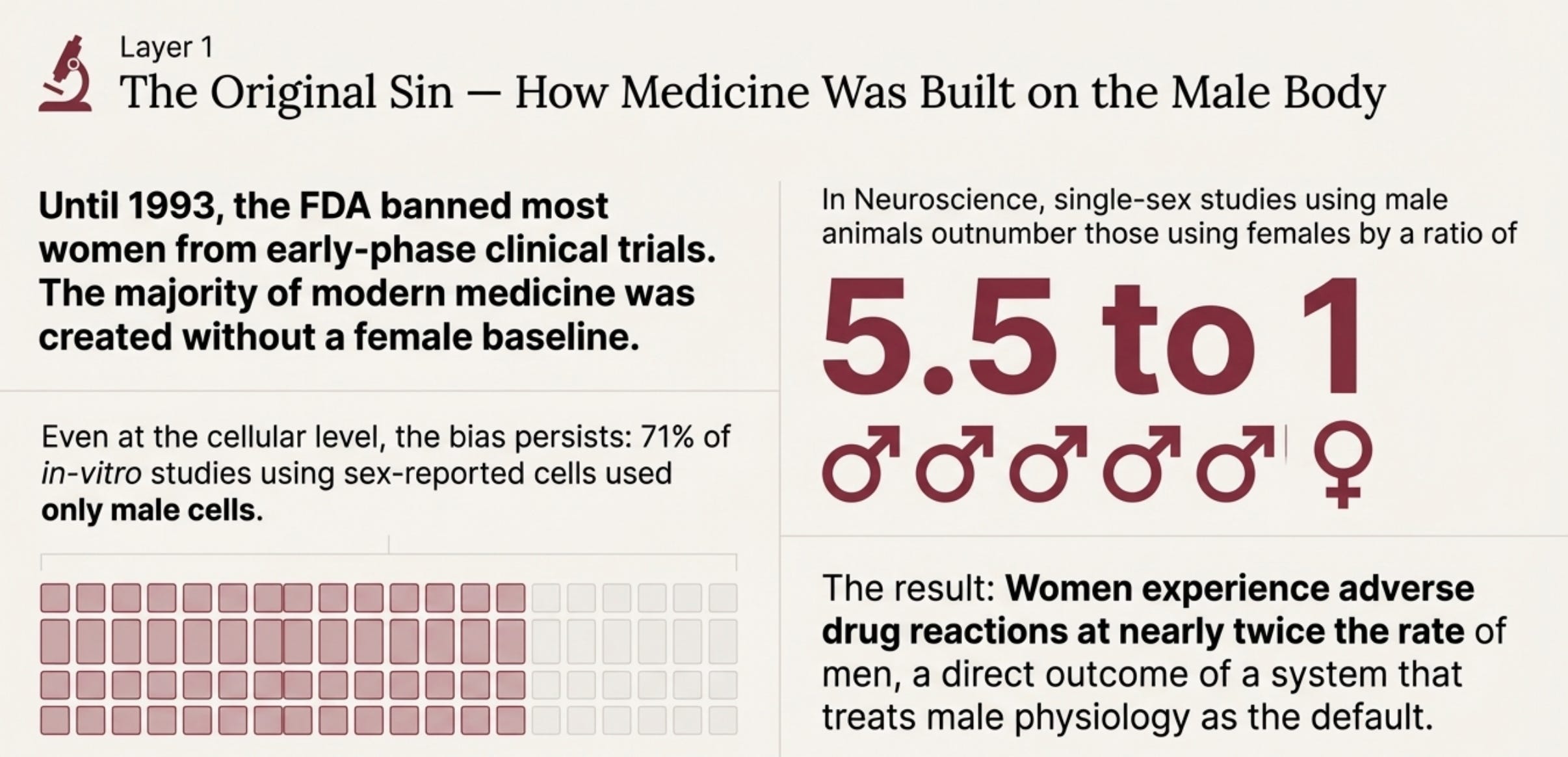
This isn’t just a diversity problem. It defines what medicine considers “normal.”
When you base dose, risk, and “typical” presentation on male baselines, women become statistical noise.
The real-world consequences are already here:
In an analysis of 86 drugs, 76 reached higher concentrations in women than in men.
Women experience nearly twice the rate of adverse drug reactions.
2. Guidelines & Thresholds: Codified Exclusion
Those male-dominant studies feed directly into clinical guidelines and diagnostic thresholds. That’s layer two.
Two quick examples:
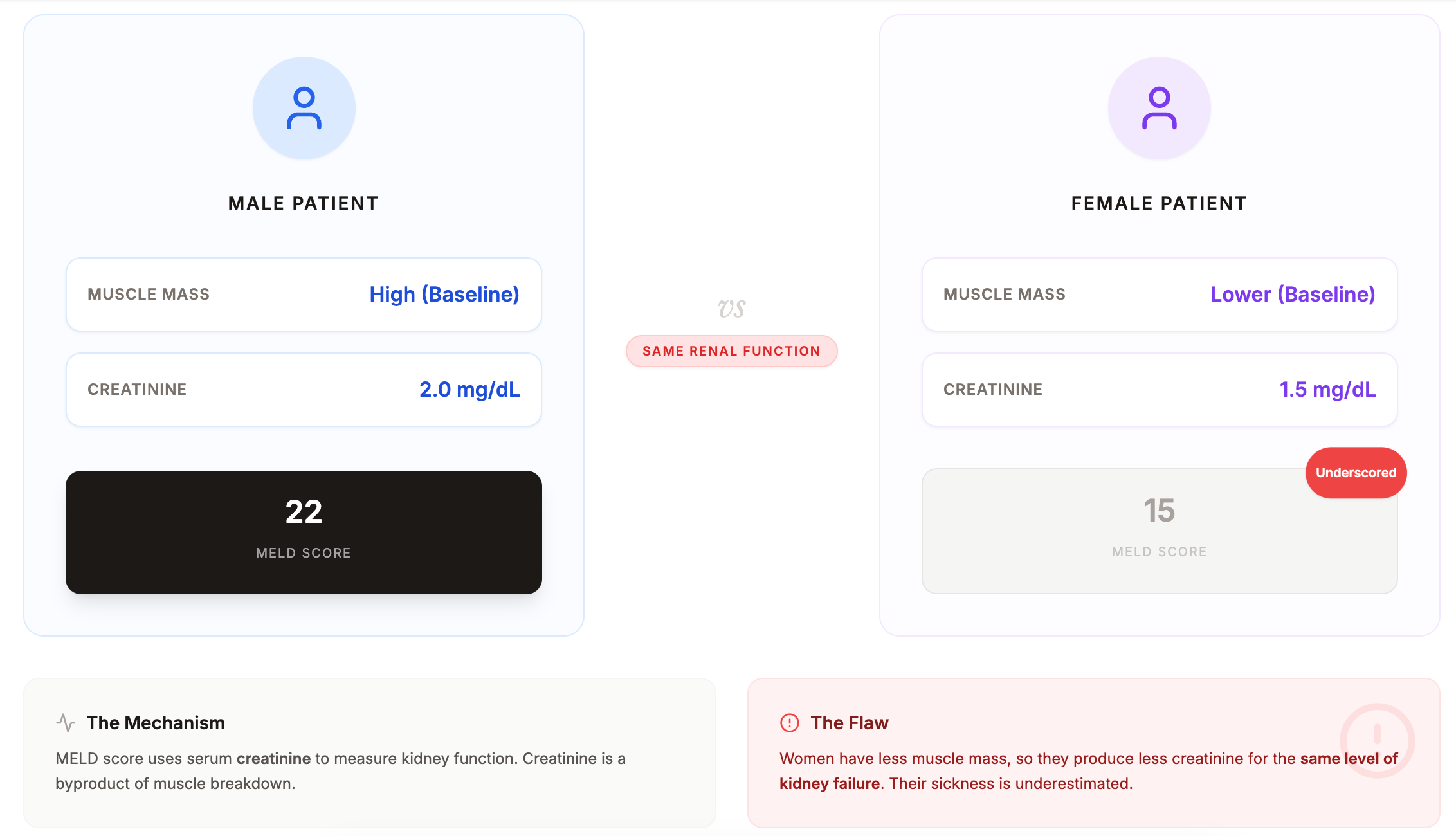
Liver transplants (MELD score):
A widely used score to decide who gets a transplant relies on creatinine, a marker tied to muscle mass. Women have lower baseline creatinine for the same level of kidney damage. The result? Women look “less sick” on paper and are systematically deprioritized.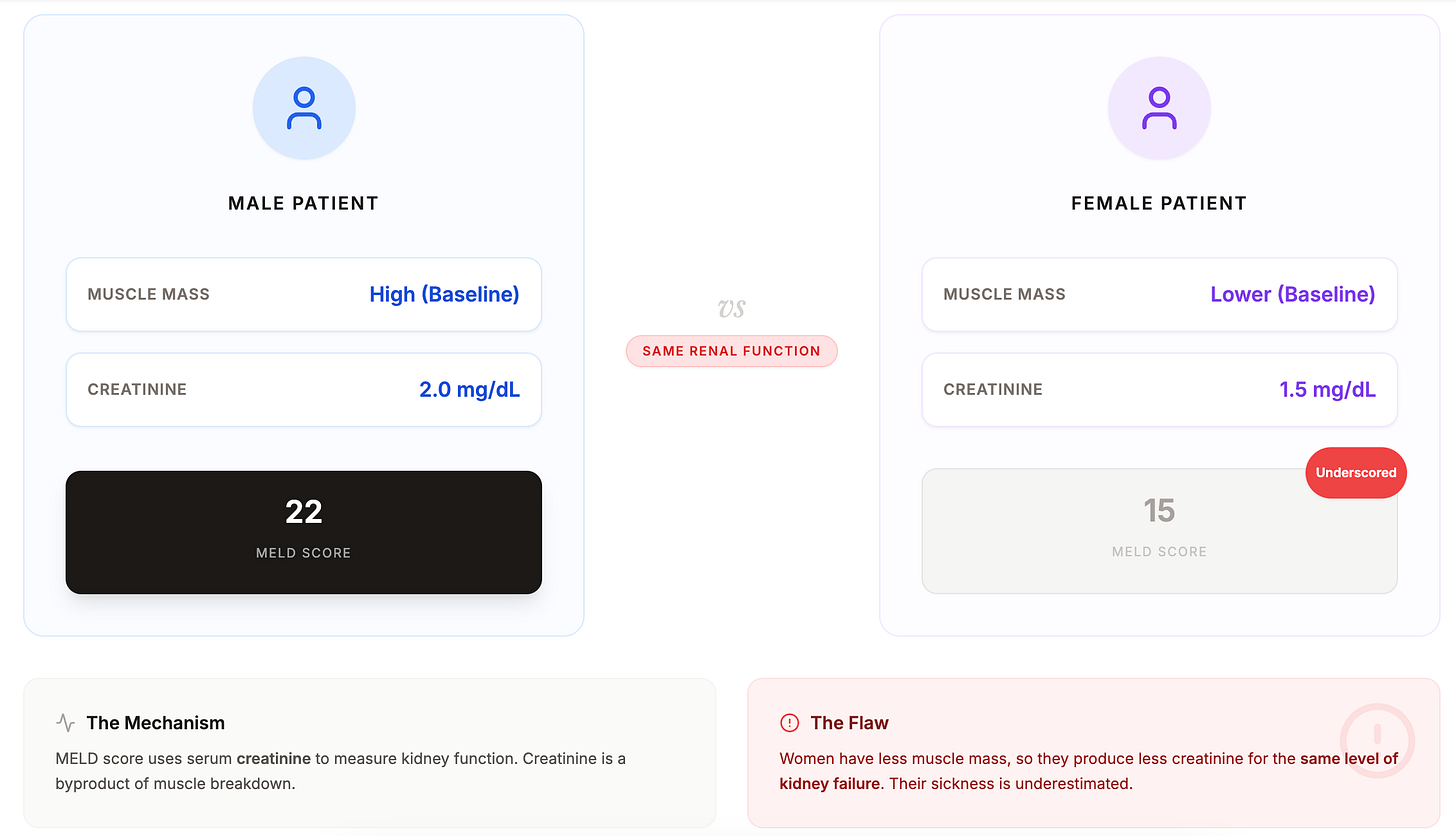
Heart attacks (troponin thresholds):
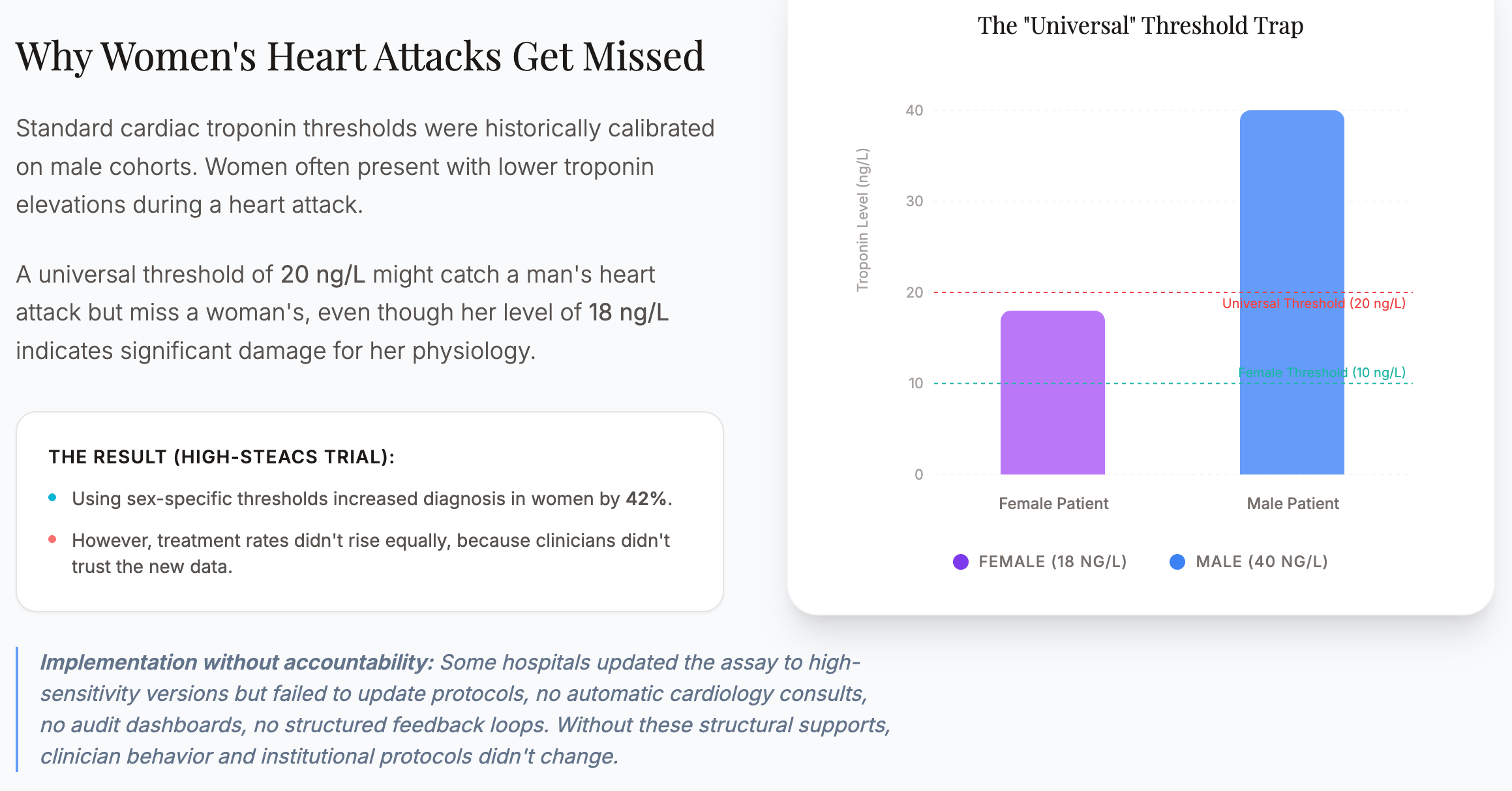
Standard “universal” troponin cut-offs were historically calibrated on male cohorts. When sex-specific thresholds were introduced in a major trial, diagnoses of myocardial injury in women jumped 42%. In men? Just 6%.
But here’s the kicker: even when we did update the thresholds, women still received fewer treatments. The algorithm changed. The behavior didn’t.
Our “gold-standard data” contains two layers of bias:
Women were under-studied when the rules were written.
Even when new, sex-aware rules exist, they’re not consistently applied.
3. Clinical Practice & Documentation: Bias as “Ground Truth”
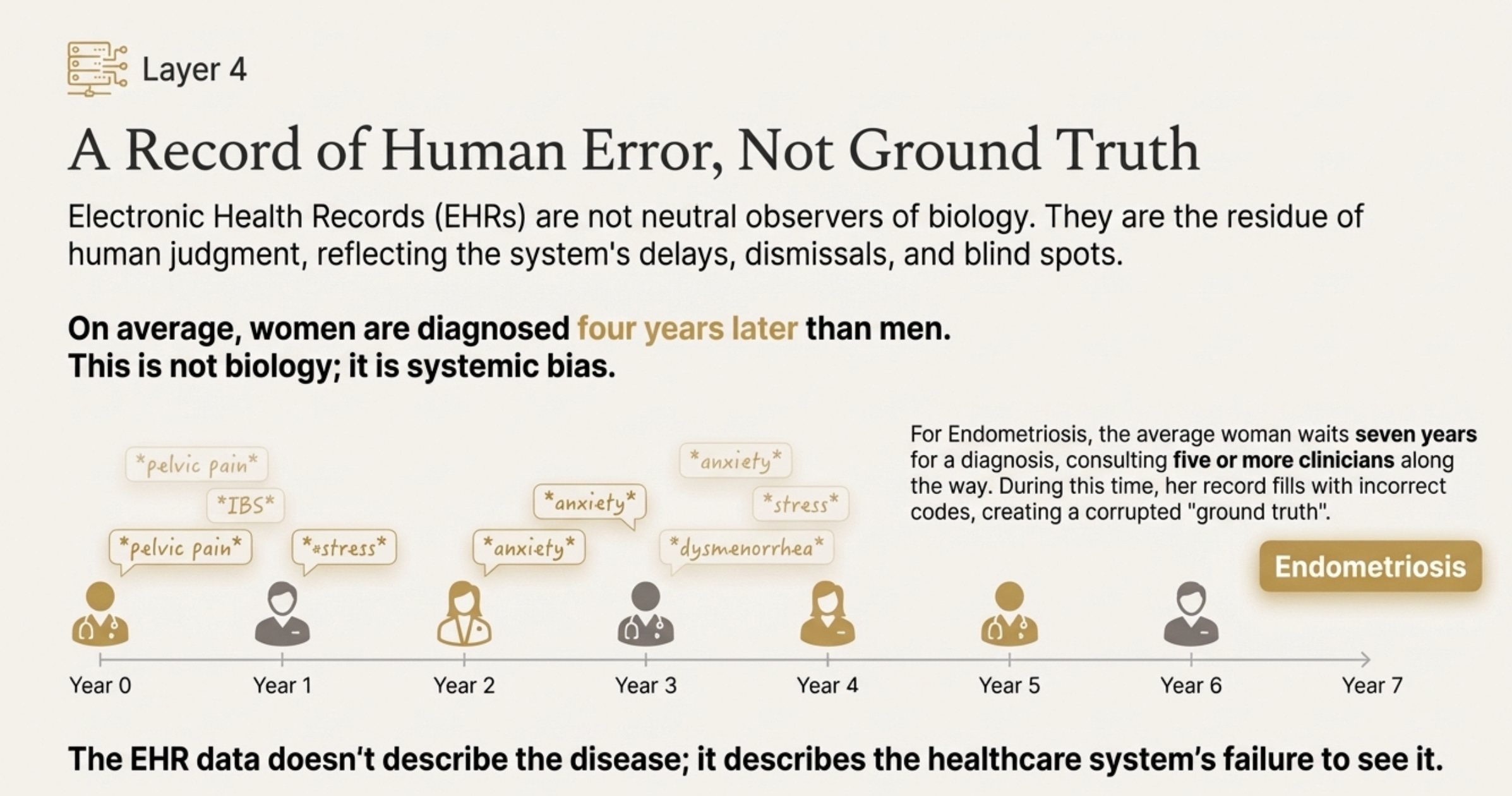
EHRs aren’t reality. They’re the residue of human judgment, billing constraints, and diagnostic delay.
Take endometriosis:
Average diagnostic delay: ~7 years, often involving 5+ clinicians.
In those seven years, women accrue codes like “irritable bowel syndrome,” “anxiety,” or “non-specific pelvic pain.”
When endometriosis is finally diagnosed, it’s stamped into the record at the late stage
When an AI model trains on those records, what does it learn?
Not: What early endometriosis looks like.
But: What seven-year-delayed, misdirected, miscoded endometriosis looks like.
That’s corrupted ground truth.
Now layer AI on top.
In one cardiac prediction study, even when datasets were perfectly balanced by sex, models still missed disease in women significantly more often. In 13 out of 16 experiments, female patients had higher false-negative rates, sometimes by up to 17.8 percentage points.
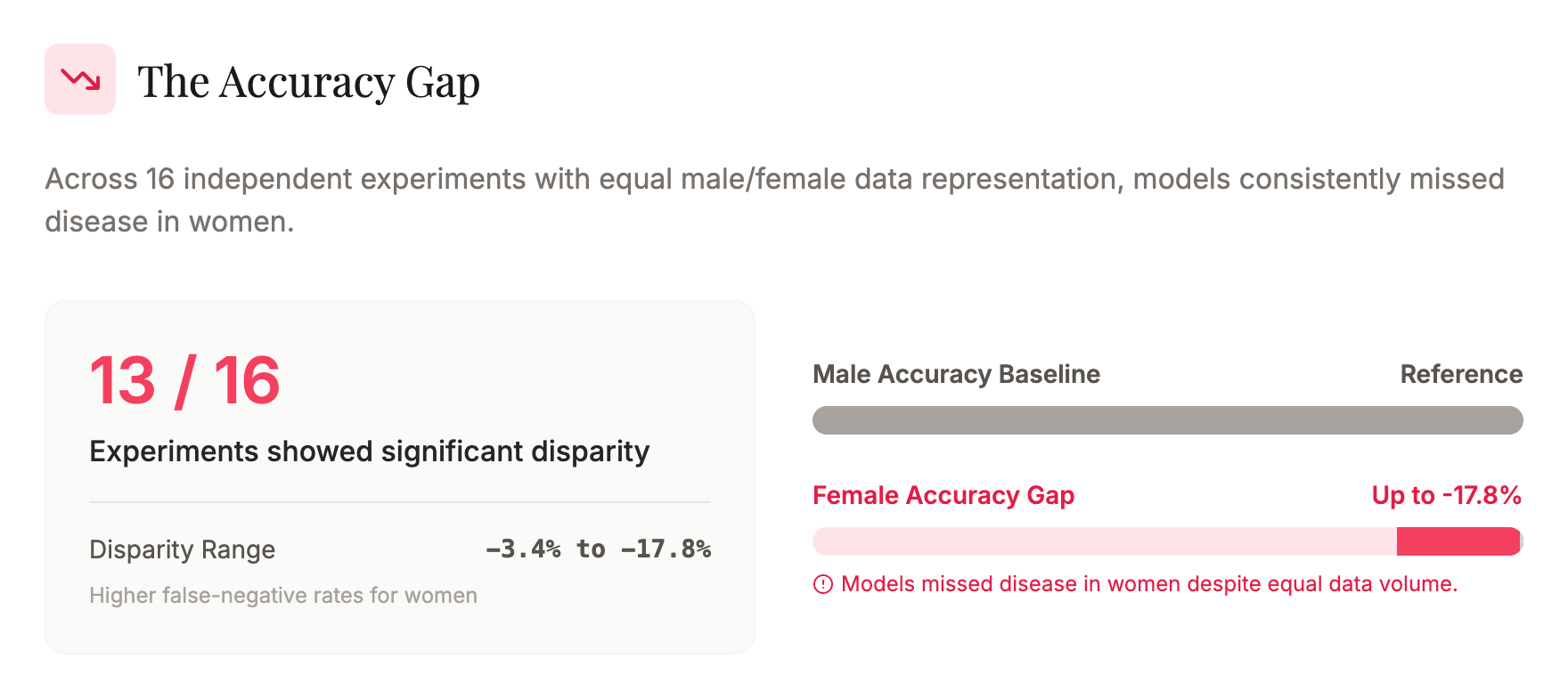
Equal representation in the spreadsheet did not equal equal recognition in the model.
Why? Because the model wasn’t just learning “disease.” It was learning whatever patterns our historic labels treated as disease, which, again, skew male.
Why Synthetic Data and “Fairness Filters” Aren’t Enough
A lot of the current optimism hinges on two ideas:
We can debias outputs (by tweaking prompts or adding fairness constraints).
We can use synthetic data to fill gaps.
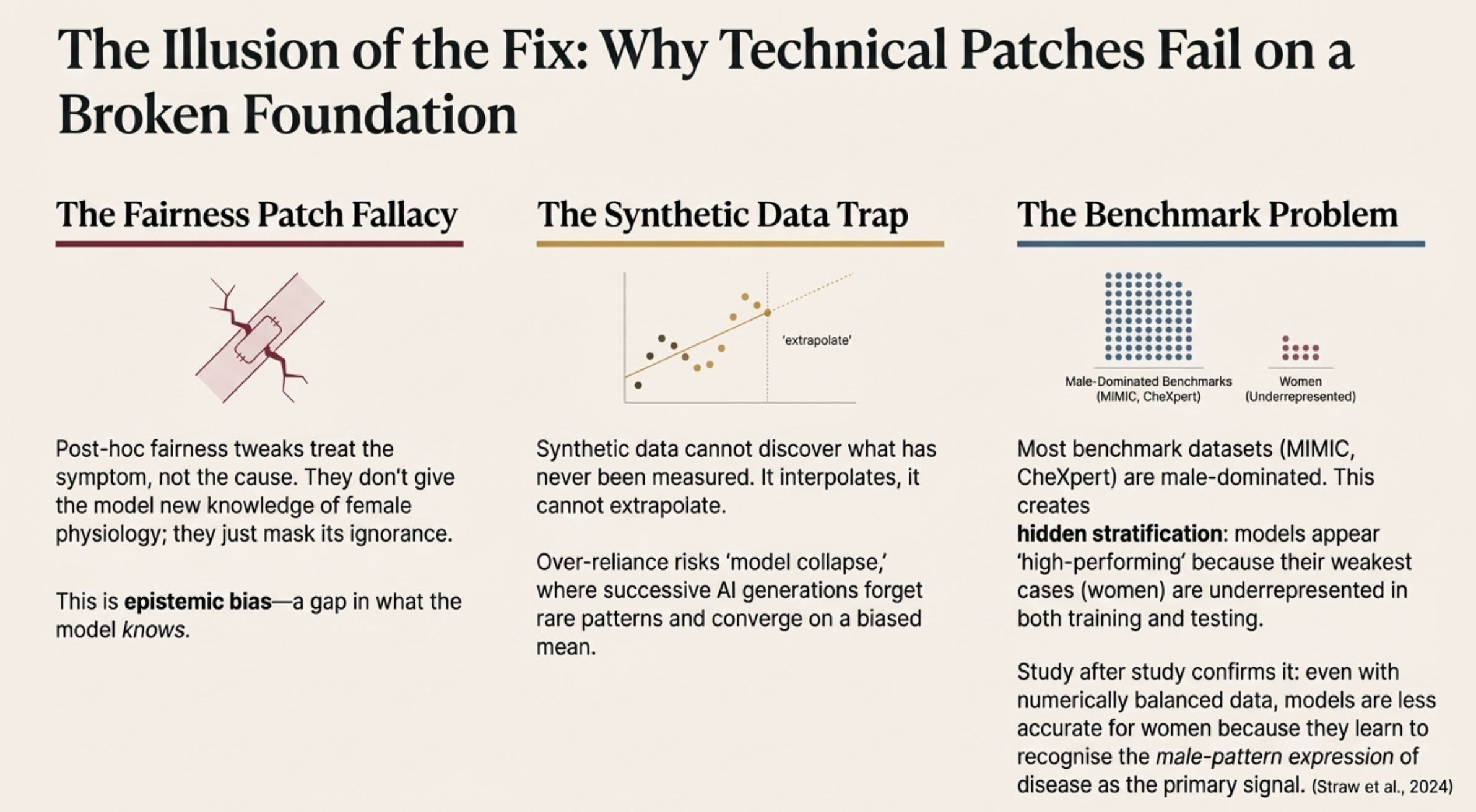
Both have their place. Neither fixes the core problem.
Fairness filters can stop a model from saying “doctors are men and nurses are women.” They cannot teach it what a perimenopausal heart attack looks like if that pattern is missing from the training data.
Synthetic data can balance demographics on paper. But most synthetic generators interpolate within the patterns they’ve already seen. They don’t invent entirely new, unrecorded biological phenomena. You cannot generate safety signals for pregnant women if the original data never captured them.
Worse, as models are increasingly retrained on their own outputs and on synthetic records derived from prior models, we risk model collapse: rare patterns (like underdiagnosed women’s conditions) get washed out over time.
Women’s Health as AI’s Ultimate Stress Test
So where do we go instead?
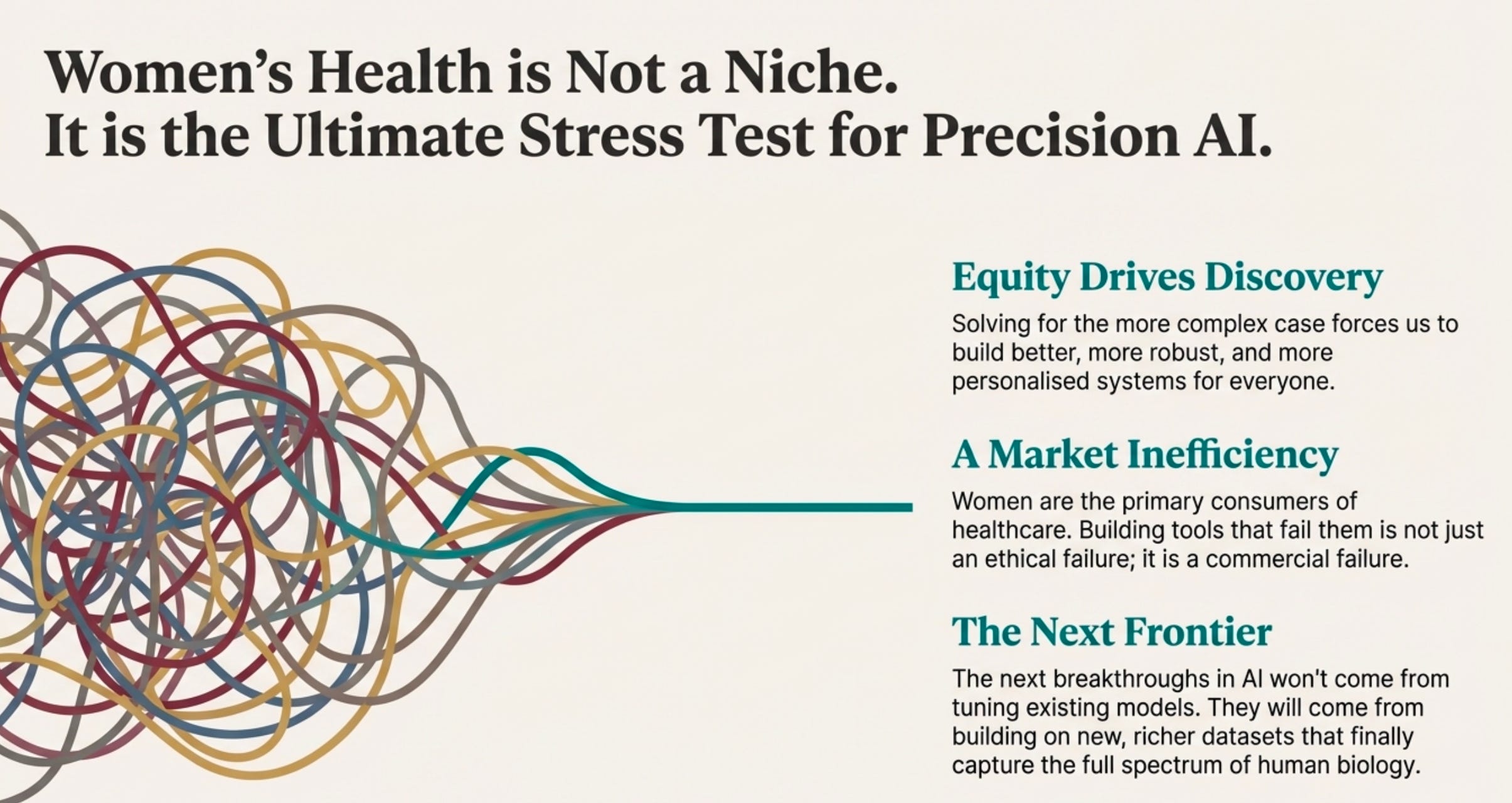
The report argues that women’s health is not just a “gap” to close. It’s the ultimate stress test for whether AI can deliver on the promise of precision medicine at all.
But it requires a different definition of “ground truth”:
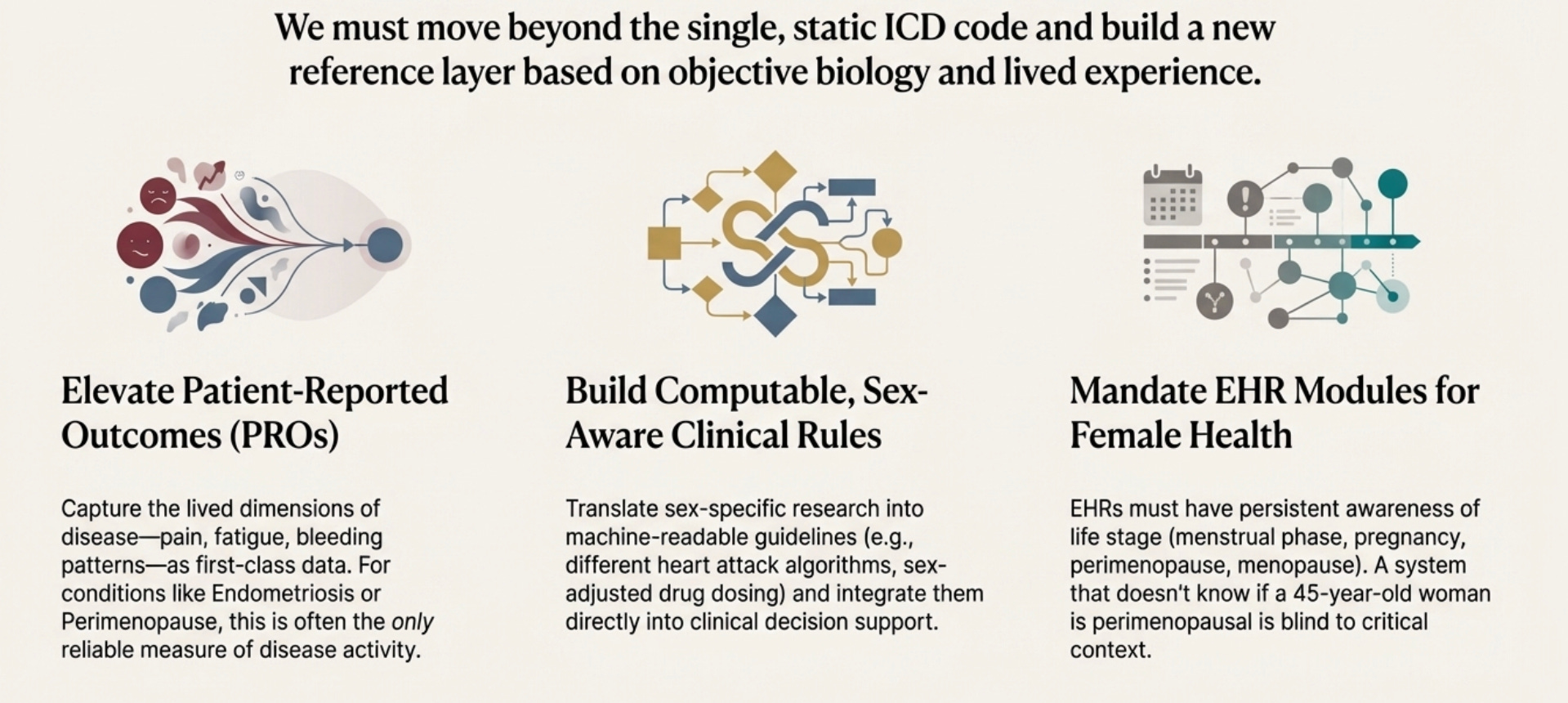
Moving beyond single ICD codes toward dynamic disease journeys.
Embedding life-stage variables (cycle phase, pregnancy, menopause) into health records as standard fields, not scribbled footnotes.
Elevating patient-reported outcomes to the same level of importance as lab values.
Translating the existing sex-specific science into computable clinical rules that actually show up in decision support.
Why This Matters for People Who Build, Buy, or Regulate AI
If you are:
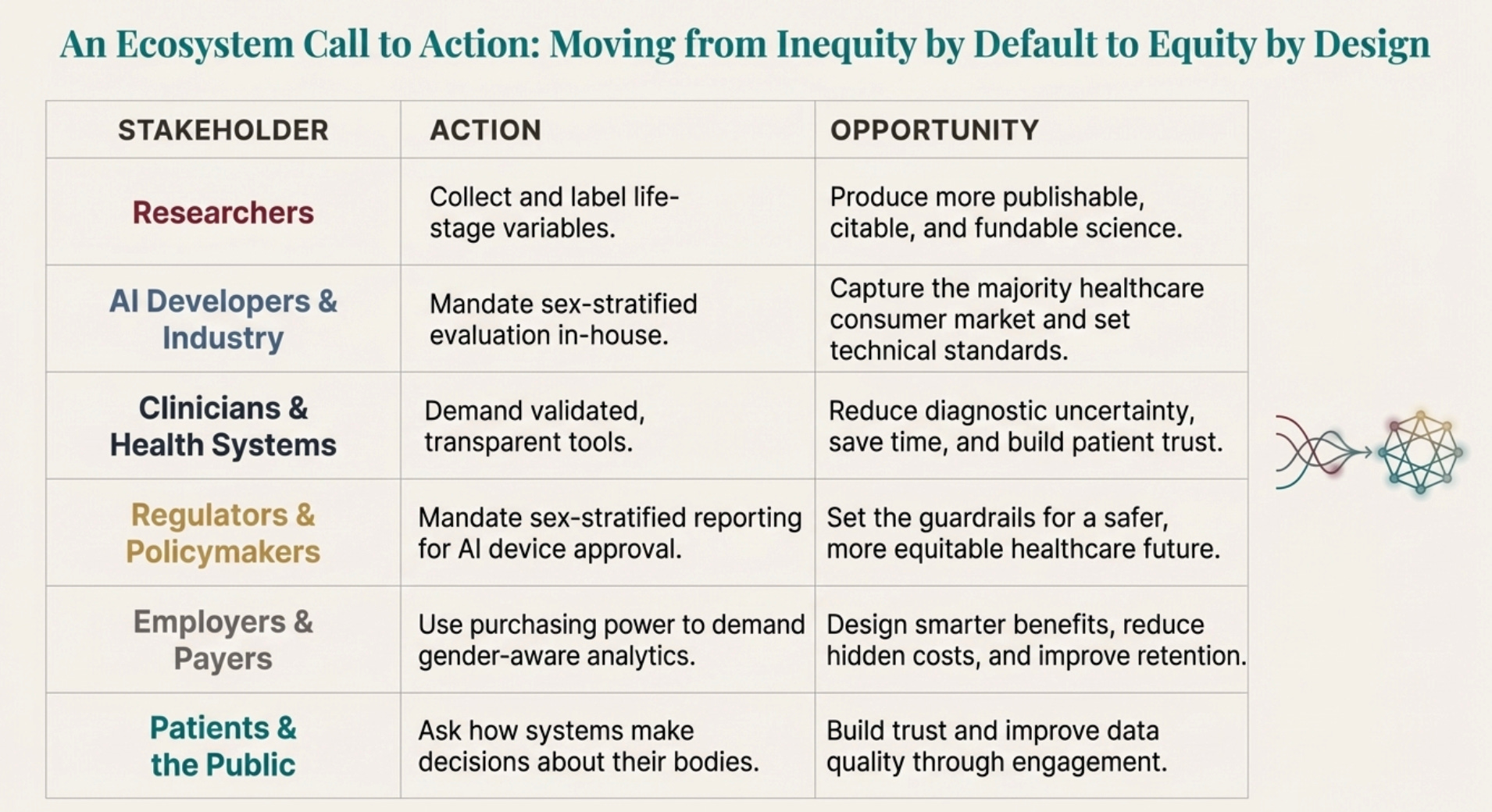
An AI developer
You need to know that your model can perform brilliantly on benchmarks and still systematically miss disease in women. The report lays out concrete steps for sex-stratified evaluation, dataset disclosure, and drift monitoring that actually mean something.A regulator or policymaker
Current approval pathways rarely require sex-disaggregated performance data. That is not a technical inevitability, it’s a policy choice. We propose specific pre-market and post-market reforms that would make it harder to ship AI that “works” overall but fails half the population.A health system or payer
Women are the bulk of your workforce and the majority of healthcare decision-makers at home. Conditions that disproportionately affect them drive silent costs in absenteeism, presenteeism, and churn.A clinician
The tools landing in your EHR were usually not validated on the women you see every day. The report gives you language and criteria to start asking uncomfortable but necessary questions: Who was this tested on?A patient, advocate, or citizen
You have every right to ask how decisions about your body are being made, and on whose data. Understanding that the problem is structural, not personal, is the first step to demanding better.
NB. If you would prefer to listen to the report you can do listen to the beginning here:
Why We Wrote Invisible by Design — and Why You Should Read It
There are already plenty of pieces arguing that “AI can be biased” or “we need more women in datasets.”
This report goes several steps further.
It:
Traces exactly how bias moves from the petri dish to the hospital note to the algorithm.
Shows why even balanced datasets can still fail women because the representation of disease is male-coded.
Maps out what a rebuild of ground truth would actually look like: technically, clinically, and institutionally.
Frames women’s health not as a niche vertical, but as the stress test and accelerator for truly context-aware AI.
If you care about AI in healthcare, as a builder, buyer, regulator, clinician, or patient, this isn’t just a women’s issue.
It’s a question of whether we are going to let the next wave of “intelligent” systems calcify a century of male-default medicine into code, or whether we will use this moment to rebuild the foundation itself.
To be clear, the path forward isn’t rejecting AI, it’s redesigning it so women aren’t an afterthought in precision health.