
Everyone Is Waiting for Someone Else to Go First
On March 10th, during CSW70, the Swiss Consulate in New York & FemTechnology convened government ministers, pharma executives, clinicians, insurers - here's what became clear.

The Architecture of a $1 Trillion Leak
Every person in that room represented a massive lever in the healthcare system. And from where each of them sat, the person across the table might look like an obstacle.
A health minister might say: I’d expand coverage, but I need economic evidence to justify it to Treasury.
A pharmaceutical company might say: We’d invest in sex-specific research, but the regulatory framework doesn’t require it, so the business case doesn’t exist.
A clinician might say: I see the diagnostic gap every day, but the codes and pathways above me were designed for an entirely different patient.
Everyone would be right, everyone would be pointing at someone else in the room to go first to change the system. And so nothing moves. And the leak compounds — quietly, at population scale, across every health system on earth.


On March 10th, during the 70th Session of the UN Commission on the Status of Women, the Consulate General of Switzerland and FemTechnology convened a room of stakeholders at Cure that does not normally gather.
Federal Councillor Elisabeth Baume-Schneider opened the morning. She leads Switzerland’s Federal Department of Home Affairs — that governs public health, social insurance, national statistics, and gender equality simultaneously. Which means she sits at exactly the intersection where this problem lives.
What followed was a cross-sector map-making exercise: where, precisely, are the coordination failures between government, clinical systems, pharma, insurance, and finance generating avoidable cost, and which decisions, by which people in this room, could unlock what none of them can achieve alone.
FemTechnology laid out the core thesis: the women’s health gap is not only a knowledge gap, but a data architecture problem. Clinical datasets that default to male biology. Reimbursement systems that structurally undervalue female-specific care. AI being trained on evidence bases where women are already missing. The system isn’t failing to treat women, it’s failing to see them, and every downstream decision inherits that blindness.
The room that showed up to work on this included: the California Surgeon General’s office, Australia’s head of delegation to CSW70, Finland’s State Secretary for Social Security, leaders from NYU Langone and Mount Sinai, Organon, Swiss Re, UBS, a former Indian Cabinet Minister, leaders from ETH Zurich, NYC Health + Hospitals, Northwell, Ferring, Nestlé, Mubadala, Bank of America, Gates Foundation, Microsoft AI, Mercer, Clinton Global Initiative, and so many other brilliant minds (total-ing 50 stakeholders in all).
The Structural Efficiency Gap
Governments set the macroeconomic weather — what gets reimbursed, what gets measured, what gets prioritized. And right now, they’re operating blind to one of the largest fiscal leaks in their systems.
McKinsey estimates closing the women’s health gap would add $1 trillion annually to the global economy by 2040. But that framing understates the problem. This isn’t a gap waiting to be closed. It’s a gap the system is actively producing.
In Switzerland, achieving equivalent health outcomes for women costs roughly 3.5 times what it costs for men. For decades, economists called this a “longevity tax” — women live longer, so they cost more. But in reality that multiplier is the price of a system built around a male default. Delayed diagnosis. Ineffective referrals. By the time a woman’s condition is correctly identified, the window for early, low-cost intervention has closed. What’s left is expensive rescue medicine.
This isn’t a Swiss anomaly. Across 27 OECD nations: every additional $100 invested in health buys men an average of 2.62 months of life. For women, that same $100 buys 1.56 months. The system is less efficient at keeping women alive. Full stop.
What Each Sector Sees — and What It Can’t See Alone
In cardiovascular disease — the leading killer of both sexes — women are 50% more likely to be misdiagnosed during a heart attack. Across 700+ diseases, women are diagnosed an average of four years later. Awareness isn’t enough to change that statistic, clinicians need the diagnostic codes, reimbursement models, and referral pathways to catch up with the biology of the patients actually in front of them.
Pharmaceutical companies are building the future of medicine on an incomplete dataset. Drug dosing still calibrated on male physiology. Women experience adverse reactions at nearly 2x the rate. And as AI accelerates drug discovery, we risk training the next generation of algorithms on the same male-default data — hard-coding yesterday’s blind spots into tomorrow’s medicine.
Finance and insurance are sitting on a mispricing crisis they haven’t fully registered. Women live longer but spend roughly 25% more of their lives in poor health. Nearly 3 in 5 women retire earlier than planned — the number-one reason is health. That means smaller pensions drawn down earlier, across longer, sicker lifespans. This isn’t the cost of longevity. It’s the cost of decades of missed early intervention compounding into retirement.
The institutions that see this first gain the most. Insurers update their models and price risk more accurately. Pharma invests in sex-specific research and serves a vast underserved market. Governments invest earlier and stop paying for decades of avoidable late-stage care.
What Comes Next
The diagnostic delays. The misrouted referrals. The conditions invisible for years. These aren’t just clinical failures — they’re costs. They accumulate in emergency departments, disability systems, insurance claims, lost workforce years.
The research foundation exists. The economic case is becoming undeniable. What happens next is a coordination question, and the room we convened on March 10th was designed to start answering it.
If you work in health economics, health system design, reinsurance, population health, or health AI — and you want to see what this analysis looks like applied to your system — please reach out: oriana@femtechnology.org.
Continuing the Conversation: Power of X Women’s Health Summit
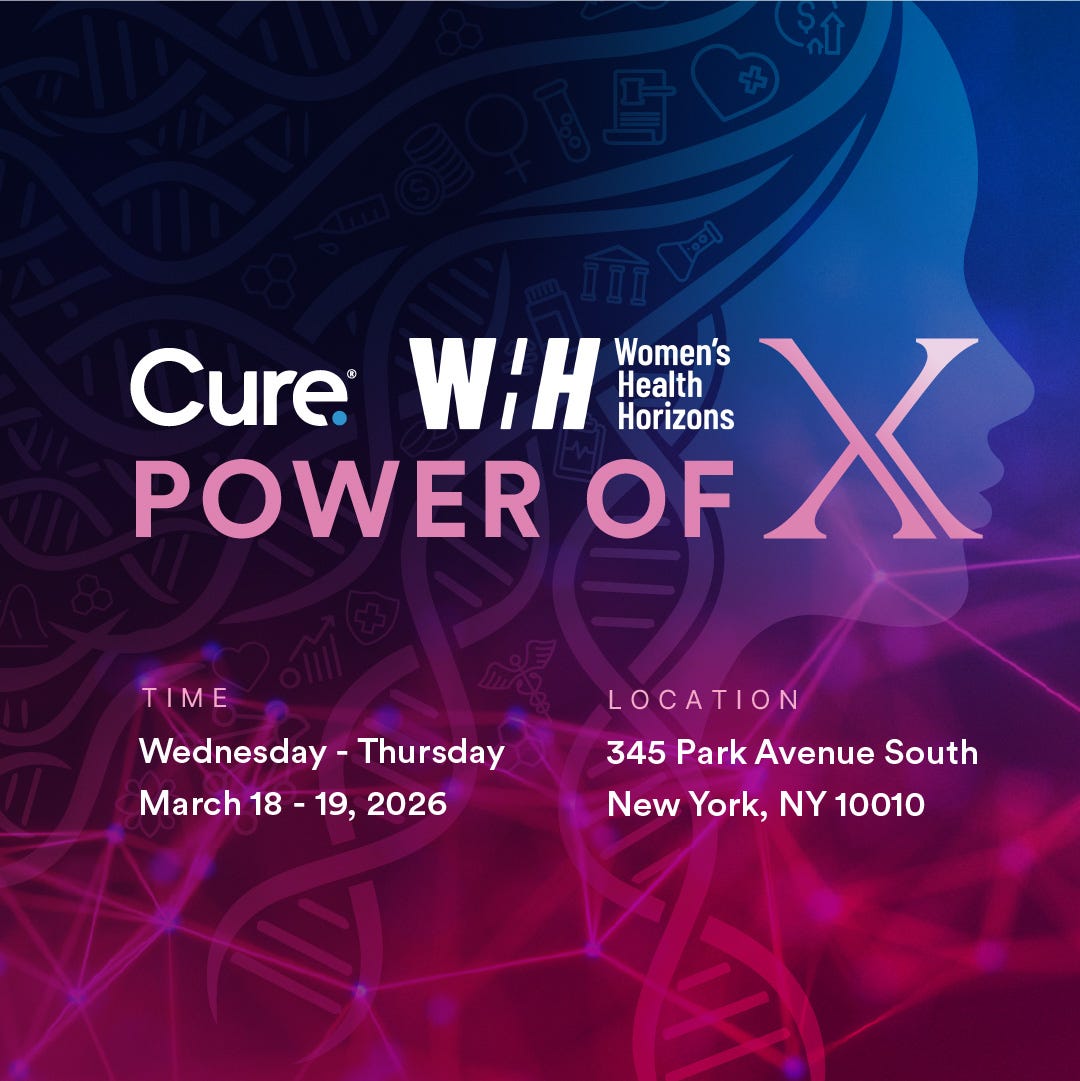
The Power of X: Women’s Health Innovation Summit takes place March 18–19 at Cure in New York (the same venue that hosted our dialogue!). Co-hosted with Women’s Health Horizons (WHH), it brings together 250+ senior leaders and 60+ speakers, including operators sharing stories from the front lines of innovation.
If you’re working on any of the challenges we surfaced on March 10th — from clinical pathway redesign to insurance model reform to AI in drug development — this is a room worth being in.
FemTechnology community members can use code FEMTECH15 for 15% off registration.
Absolutely OUTSTANDING article. I am a big fan of all of your content, but this one took the cake: I would like to quote every. single. sentence.
We have been talking about the gap for too long - now it is time to close it.